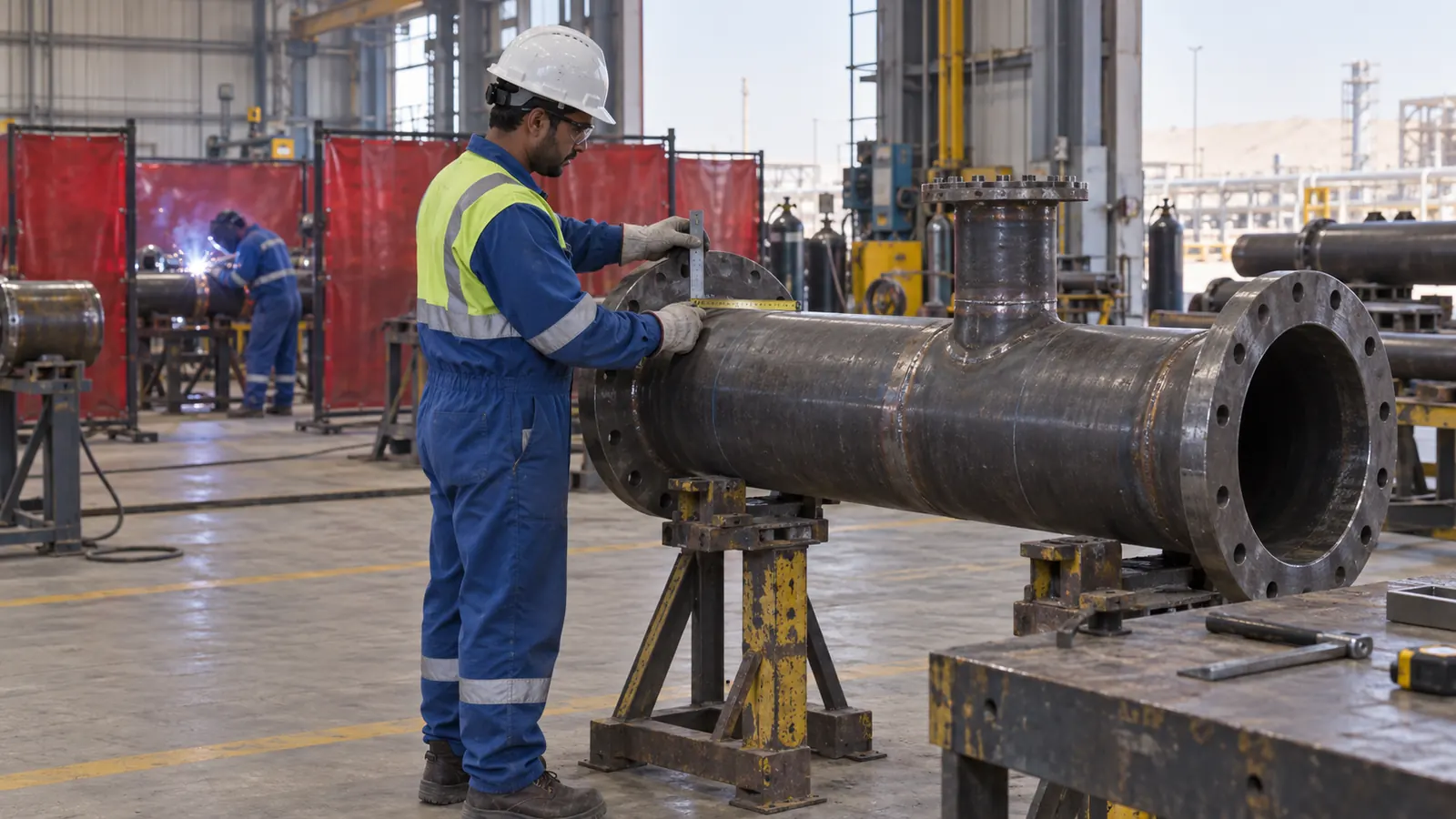
Gulf Orbit supplies pipe fabricators across Saudi Arabia for oil and gas, petrochemical, and industrial fabrication shops. Pipe fabricators interpret complex isometric drawings, cut, bevel, and fit up pipe spools ready for X-ray welding.
Quick facts
Trade
Pipe Fabricator · Mechanical & Electrical Trades
Worker cards
Site-specific cards and approvals are confirmed per request.
Works from
Isometrics, spool sheets and cut lists
Materials
Carbon steel, stainless steel and chrome-moly; state yours in the RFQ
Usually supplied with
6G welders, helpers, and a storekeeper for material control
Documents with the CV
CV, iqama and profession documents
Mobilization
Mobilization of in-Kingdom personnel to project sites anywhere in Saudi Arabia takes 48–72 hours from purchase order (PO), subject to worker documents and site approvals.
RFQ response
Complete RFQs get a response within 24 hours: a priced quotation, or an acknowledgement with any questions needed to price it.
What they do on site
Mark out and cut pipe from isometric drawings
Bevel, fit up and tack spools ready for welding
Check spool dimensions and orientation before release
Maintain spool identification and traceability records
What to put in your RFQ
State the spool material, the drawings, and whether fabrication is in the shop or on site.
The difference between a pipe fabricator and a pipe fitter
A pipe fabricator works primarily in the fabrication shop, building complex pipe spools from raw straight pipe and fittings using isometric drawings, cut lists, and beveling equipment. A pipe fitter, by contrast, operates on the construction site to align, bolt, and fit pre-fabricated spools into the plant structure. Request the right trade: fitters who are new to spool assembly slow the shop down.
Tolerance precision and fit-up quality
High-pressure piping in Eastern Province petrochemical facilities requires strict adherence to ASME B31.3 tolerances. Pipe fabricators set root openings, land thickness, bevel angles (37.5°) and dimensional alignment to the specification, which reduces high-low mismatches and weld cut-outs at radiographic (RT) examination.
Shop crew synchronization and productivity
In high-throughput fabrication yards, each pipe fabricator is typically paired with a helper and works in tandem with a 6G welder. Keeping that cell together keeps fit-up, tack welding and dimensional checks moving, so the welding bays are not left waiting.
Shop fabrication or site fabrication
Not every spool is built in a covered shop. Field fabrication at the rack, in a laydown area or in a temporary site shop means fewer fixtures, weather and dust, lifting for every move, and tighter coordination with the fitters installing the spools. A fabricator used to a production shop is not automatically efficient in the field. State where fabrication will happen, and fabricators are matched to those conditions.
What to check before they start
Give each fabricator a spool sheet from your job on arrival, and check the cut lengths and fitting take-offs they calculate.
Check the first spools dimensionally before welding: orientation, bevel and root opening against your procedure.
Brief the shop's material-control rules, such as keeping stainless steel tools separate from carbon steel, before stainless work starts.
Agree how heat numbers and spool markings are transferred, so traceability is kept from cutting to release.
If your yard runs a fabrication trade test, send its content with the RFQ so fabricators are put forward against it.
Typical crew shape
In a fabrication shop, output depends on the work cell rather than on one trade. A pipe fabricator marks, cuts, bevels and fits up; a helper handles material and grinding; a qualified welder completes the joints; and a storekeeper controls pipe, fittings and heat-number records. Send the spool count and the shop layout, and the cell can be sized for your throughput.
Send how many workers you need for Pipe Fabricator, the city, the start date and the duration. CVs and documents for each worker come to you for approval, and nobody mobilizes before you approve them. See the full request process
Frequently asked questions
What is the primary difference between a pipe fabricator and a pipe fitter?
A pipe fabricator builds pipe spools in the shop from isometrics, cutting, beveling, and tacking joints. A pipe fitter installs, aligns, and supports those completed spools on the actual site structure.
Can your pipe fabricators read complex isometric drawings and spool sheets?
Yes. Isometric reading, cut-length calculation with fitting take-offs, orientation and bill-of-materials checks are part of the trade. If your yard runs a trade test, tell us what it covers and fabricators are put forward against it.
Do they have experience with carbon steel, stainless steel, and alloy pipes?
Yes. Fabricators can be matched to carbon steel (A106/A53), stainless steel (304/316) and chrome-moly work. State the materials in your RFQ so cutting and contamination-control experience is checked.
What certifications and trade documentation do they carry?
Worker documents, including iqama and trade documentation, are reviewed per project before mobilization.
How quickly can pipe fabricators mobilize?
Mobilization of in-Kingdom personnel to project sites and fabrication yards anywhere in Saudi Arabia takes 48–72 hours from purchase order (PO), subject to worker documents and site approvals.
Do pipe fabricators weld the spools?
They tack joints to hold the fit-up. Production welding is done by welders qualified to your procedure, so request 6G or TIG welders on the same RFQ to complete the shop cell.