What the workforce looks like in this sector
Maintenance crews are broad rather than deep: a small number of people covering several trades, working in short access windows around occupants, with the flexibility to switch between reactive and planned work. The same crew may clear a blocked drain in the morning, service AC units after lunch and patch and paint a corridor in the evening. That breadth, and a supervisor who can prioritise the day's work orders, matter more than a large headcount.
Occupied buildings change the working day
Access windows, noise restrictions, out-of-hours working and moving around occupants all shape what a crew can achieve in a shift. A requirement that states the building is occupied, and when work is permitted, gets a crew planned around that rather than surprised by it. Hospitals, malls, offices and schools each have their own quiet hours and no-go areas; list them per building if the contract covers several.
Breadth beats specialisation here
On a maintenance contract, a worker who can handle several related tasks is often worth more than a narrow specialist who is idle between call-outs. Say whether the work is planned, reactive or a mix, because it changes the shape of the crew proposed. A reactive-heavy contract needs electricians, plumbers and AC technicians on every shift; a planned programme can bring in masons, painters and carpenters in blocks.
Scaffolding is still the access constraint
Facade work, high-level plant and ceiling voids all need safe access before anyone can start. Scaffolders belong in a maintenance requirement more often than clients expect. In an occupied building the scaffold also needs to protect the public below and keep entrances usable, so say where the scaffold will stand and how long it may stay up.
AC and building services carry the summer load
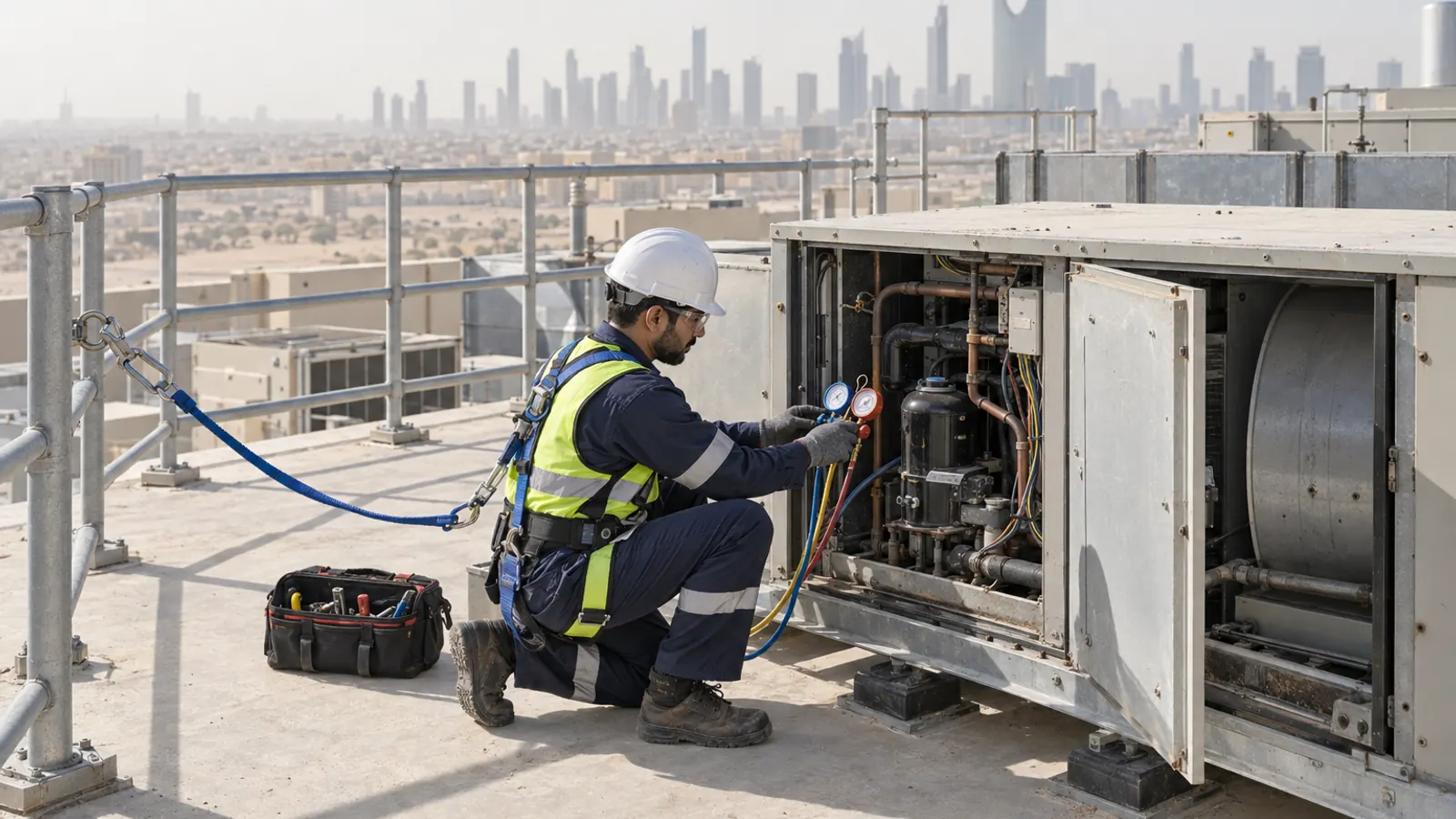
In Saudi summers the air-conditioning plant is the system occupants notice first. Split units, package units, chillers and duct systems each need different skills, and the peak of call-outs lands in the hottest months. Name the AC types in the portfolio and whether the crew covers servicing, breakdowns or both, so AC technicians and duct fitters are sized for the season and not only the average month.
Work orders, reporting and the supervisor
Maintenance runs on work orders: logged, assigned, completed and closed with a note or photo. The supplied crew has to work inside your system, whether that is a CAFM tool or a spreadsheet. A supervisor who takes the day's orders, allocates them across the crew and closes them out is the link between your helpdesk and the workers, and is worth including for any crew larger than a few people.
Portfolios spread across a city
A contract covering many buildings means travel between sites during the day. Travel time is lost time on tools, and it grows with traffic. Give the list of sites, how the crew will move between them and whether vehicles and drivers are part of the request. Transport is quoted on request, and a light driver often pays for itself on a spread-out portfolio.
Occupancy certificates and handover
Under a 2024 amendment to the Saudi Building Code Implementation Law, an occupancy certificate is required before a building's electricity is fully connected. Facility teams taking over new buildings therefore often need MEP and finishing trades in the weeks around handover, to close out the items an inspection raises. State whether the building is occupied or still in handover.
Site access in Facility Maintenance
- Building security and badges
- Occupied buildings issue contractor badges through building management or security, often per named worker. Send approved names and documents early, and say whether workers need an escort in some areas.
- Restricted hours and areas
- Some facilities, including hospitals, schools and campuses, set strict hours and areas where contractor staff may work. The facility sets these windows; list them in the RFQ so the shift pattern follows them.
- Hot work and fire systems
- Welding, cutting or grinding inside an occupied building usually needs a hot-work permit and a fire-alarm isolation arranged by the facility. Say who issues the permit, so work that needs it is scheduled with it.
- Industrial facilities
- Maintenance inside a plant or warehouse runs under that facility's permit-to-work and induction. Gulf Orbit's safety induction is completed before deployment, and the site's own requirements are confirmed per site.
- Cards for access equipment
- Scaffolders and forklift operators carry TUV cards where the site requires them. Mobile elevating work platforms may need operator familiarisation set by the facility.
These are common sector practices, not legal requirements; what your site needs is confirmed per request.
Mobilization and RFQ response
- RFQ response:
- within 24 hours of a complete RFQ
- Mobilization:
- 48–72 hours from PO for in-Kingdom personnel, subject to worker documents and site approvals what can delay it
- Worker cards:
- TUV or Aramco card copies sent with CVs where the trade holds one
- Safety induction:
- completed by every worker before deployment; record kept
- Offices:
- Dammam (head office), Jubail Industrial City, Al Khobar
- Accommodation and transport:
- quoted on request