
Temporary Access Planning for Industrial Sites with Gulf Orbit
How to think about scaffolding access before sending a request for industrial maintenance, inspection, painting, insulation, or mechanical work.
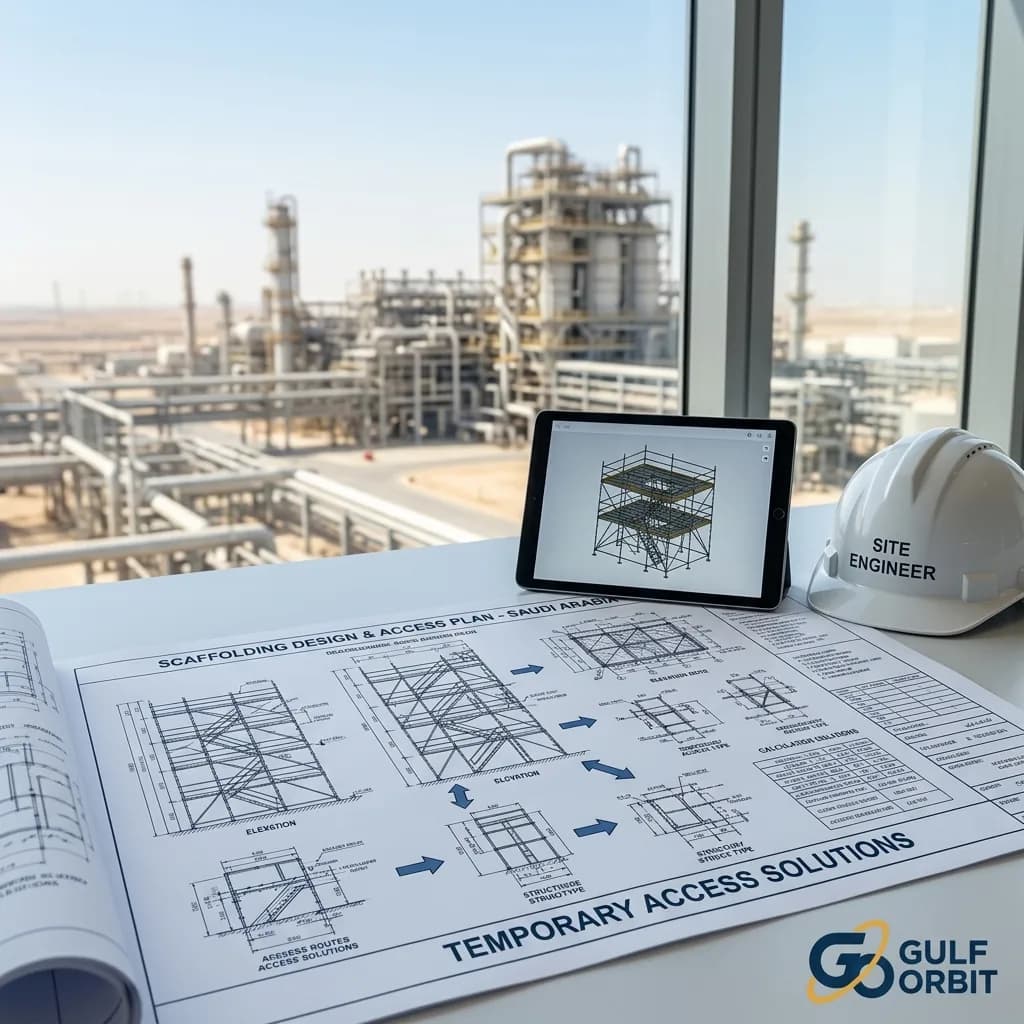
Temporary access planning starts with the work area, height, duration, trade sequence, safety requirements, and dismantling plan.
Key takeaways
- Access planning should happen before crews arrive.
- Industrial sites need scaffolding aligned with permits and trade sequencing.
- Gulf Orbit can review temporary access and scaffolding manpower requests.
Temporary access is a project control point
In industrial sites, access is not a small detail. It controls whether inspection, insulation, painting, mechanical, and maintenance teams can start safely. Good planning reduces rework and waiting time.
What to define before requesting support
Define the work area, approximate access height, duration, trade sequence, number of workers using the scaffold, safety rules, and whether access needs to move or change during the job.
How Gulf Orbit reviews access requests
Gulf Orbit looks at the practical information that affects scaffolding manpower and erection support: city, site type, work front, start date, duration, and any documentation requirements.
Why dismantling should be planned early
Dismantling is often forgotten until the end. Including removal timing in the request helps avoid cluttered work fronts and makes handover cleaner.
FAQ
What is temporary access scaffolding?
Temporary access scaffolding gives workers safe access to elevated or difficult work areas for construction, inspection, maintenance, painting, insulation, or mechanical tasks.
Can Gulf Orbit review temporary access requests?
Yes. Gulf Orbit can review scaffolding rental, erection, dismantling, and manpower requests for temporary access work.