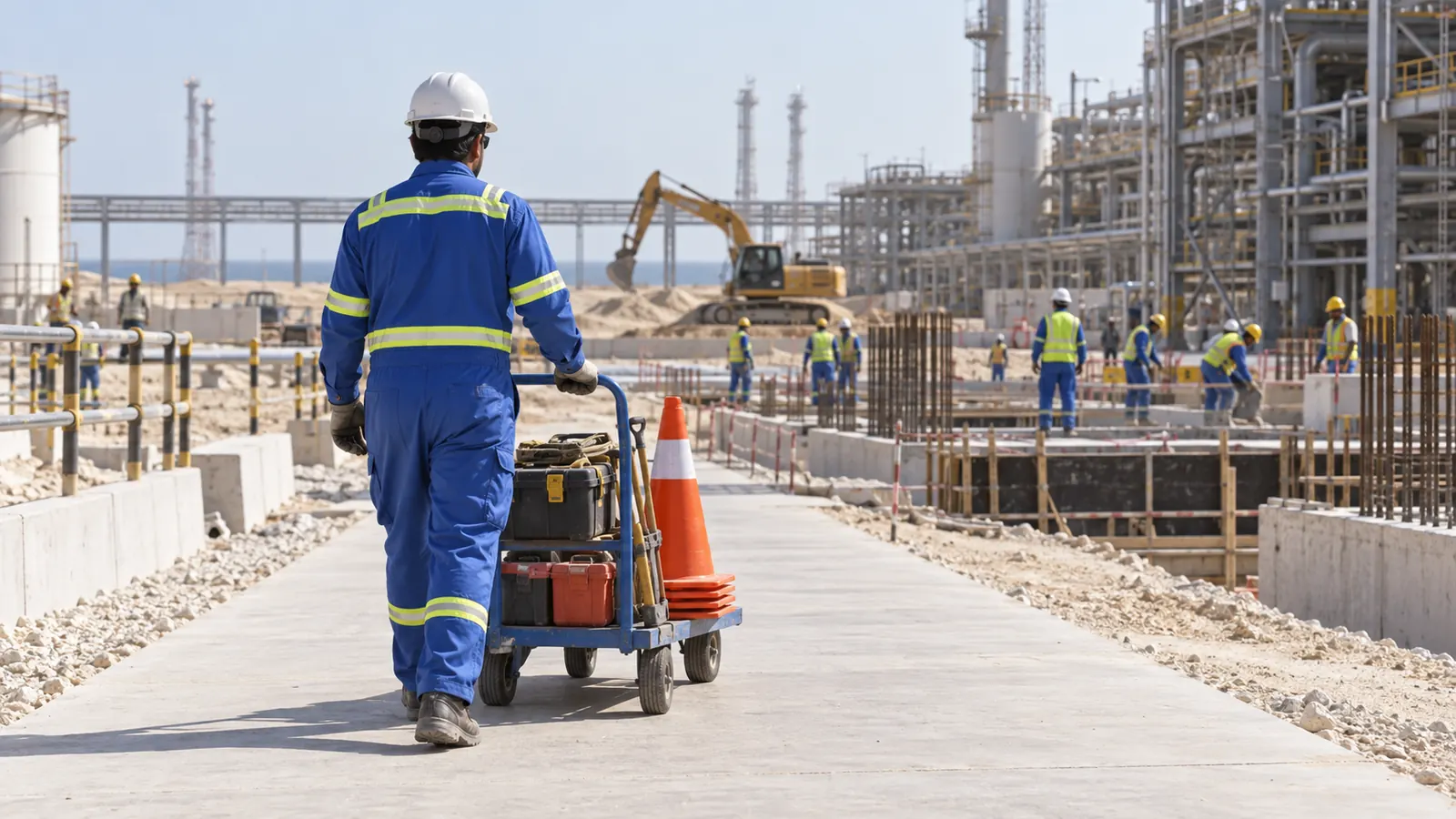
Gulf Orbit supplies civil, mechanical, and industrial helpers to projects anywhere in Saudi Arabia from its offices in Dammam, Jubail and Al Khobar. Helpers support skilled craftsmen by staging materials, mixing mortar, hauling pipe sections, and keeping work areas clear, so tradesmen can stay on their own work.
Quick facts
Trade
Helper · Civil Construction Trades
Worker cards
Site-specific cards and approvals are confirmed per request.
Supports
Scaffolding, civil, mechanical and shutdown crews
Typical tasks
Material handling, mixing, staging, cable-pulling support and housekeeping
Planned as
A ratio to the skilled trade, set by the scope
Documents with the CV
CV, iqama and profession documents
Mobilization
Mobilization of in-Kingdom personnel to project sites anywhere in Saudi Arabia takes 48–72 hours from purchase order (PO), subject to worker documents and site approvals.
RFQ response
Complete RFQs get a response within 24 hours: a priced quotation, or an acknowledgement with any questions needed to price it.
What they do on site
Move and stage material to the work front
Mix mortar, render and screed as directed
Hand material and tools up to working level
Clear waste and maintain housekeeping around the work area
What to put in your RFQ
State which trade crew the helpers support (scaffolding, civil, mechanical or shutdown) and the ratio you plan.
The primary value of a dedicated helper crew is trade productivity. When high-rate welders, pipe fitters, scaffolders, or block masons spend time fetching materials, shifting scaffolding tubes, or cleaning waste, contractor burn rates escalate. Pairing skilled tradesmen with energetic, proactive helpers keeps primary craftsmen focused on productive installation work.
Material handling at the work front
Helper tasks centre on site logistics: staging rebar, moving blocks, mixing mortar to the specified ratios, uncoiling electrical cables, and passing tools up scaffold ladders safely. Keeping material flowing to the installation face reduces the time specialized technicians spend waiting.
Housekeeping and worker documents
Good site housekeeping directly correlates with fewer trip hazards, improved safety audits, and higher productivity. Our helpers keep corridors, access ramps, and work platforms clear of debris and scrap. Worker documents are reviewed per project for every helper.
Helpers on a shutdown
On a shutdown, every helper needs the same gate pass, site induction and permit briefing as the tradesman they support, so helpers count fully in the approval workload before the window opens. Raise helpers in the same request as the trades, with the same dates and shift pattern, rather than adding them once the trades are approved. Late helper requests are a common reason a crew is short on the first shift.
What to check before they start
On day one, tell the helpers which crew and foreman they report to. A helper without a named trade crew ends up idle.
Brief them on your manual-handling limits and the lifting aids on your site before they move heavy material.
Cover heat stress in the first briefing: water, shade, rest breaks and the summer midday break for outdoor work.
Make sure helpers working on scaffolds or at height know your access rules. Helpers pass material but do not alter scaffolds.
Review the ratio after the first week. If skilled trades are still fetching material, add helpers; if helpers are waiting for work, reduce them.
Typical crew shape
Helpers are planned against a trade, not as a separate crew. Scaffolders, masons, steel fixers and fitters each work with helpers who keep material at the work face, and the helpers take direction from that trade's foreman. The ratios in the FAQs are a starting point; send the trades and the scope, and a ratio is proposed for your work.
Send how many workers you need for Helper, the city, the start date and the duration. CVs and documents for each worker come to you for approval, and nobody mobilizes before you approve them. See the full request process
Frequently asked questions
What specific tasks do your helpers carry out on construction sites?
They carry materials, mix mortar and concrete, transport scaffolding components, stage piping spools, assist with cable pulling, and maintain clean, hazard-free work areas.
What is the recommended ratio of helpers to skilled tradesmen?
Standard ratios depend on the trade: typically 1 helper per 2 block masons or pipe fitters, 1:1 for heavy scaffolding erection, and 1 helper per 3 to 4 electricians or spray painters.
Can you mobilize large helper headcounts for short-notice site cleanups or shutdowns?
Helper headcount and start dates are confirmed per request. Share the scope, headcount and dates for turnaround logistics, handovers, material staging or cleanups, and availability is confirmed before quotation.
Are your helpers trained in manual lifting and safety practices?
Yes. Workers complete Gulf Orbit's safety induction before deployment, and induction records are kept. Manual-handling, PPE and heat-stress requirements specific to your site are confirmed before mobilization.
What legal documentation is provided for helpers working on our site?
Worker documents, including iqama and trade documentation, are reviewed per project before mobilization.
Is a helper the same as skilled labour?
No. A helper supports a named trade and works under its direction. Skilled labour carries out defined tasks independently, such as basic installation or finishing work. Both are on the register, so request each as its own line.