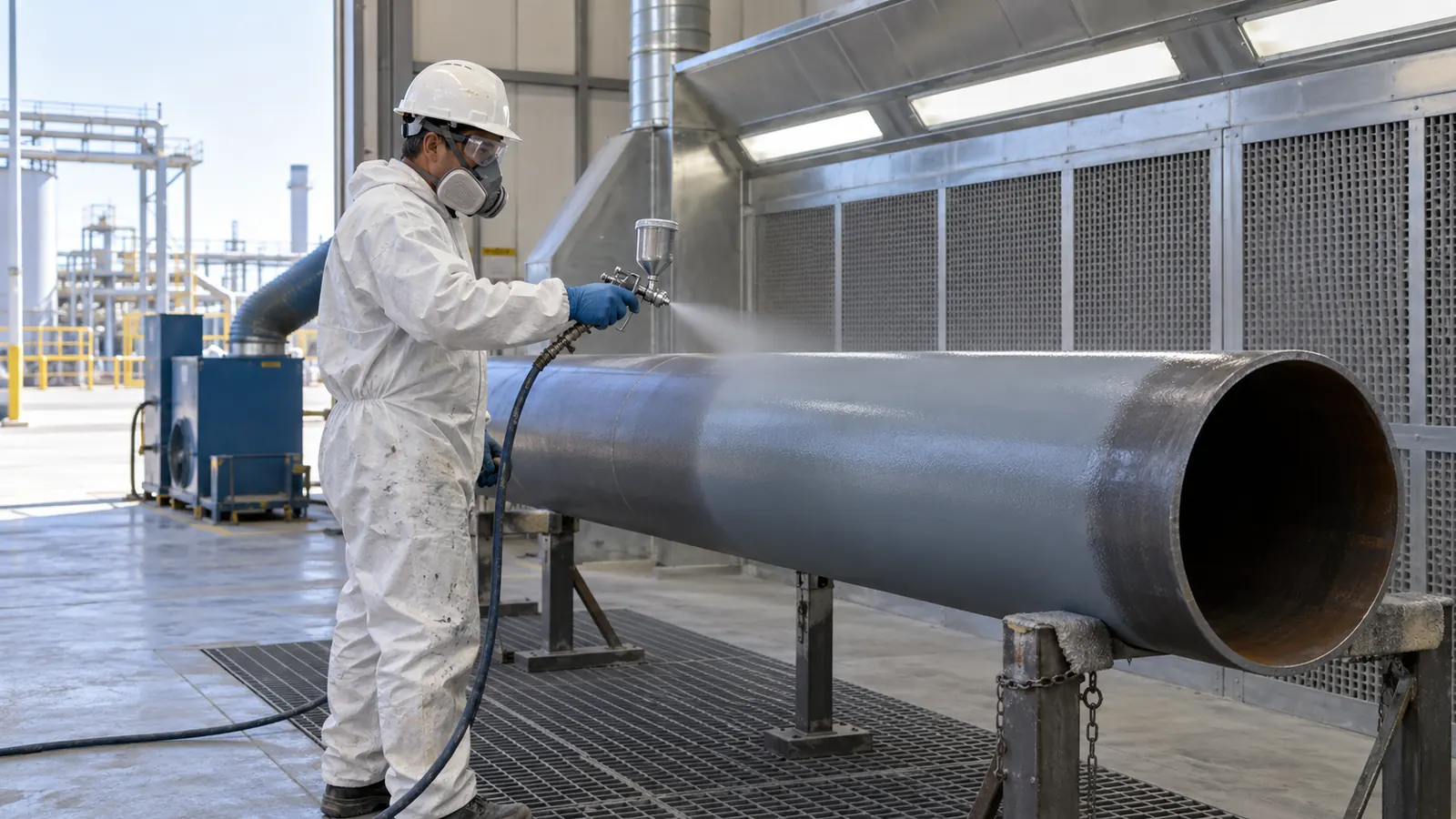
Gulf Orbit supplies industrial spray painters in Saudi Arabia for structural steel, storage tanks, piping spools, and facility maintenance, covering airless spray application, epoxy and polyurethane systems, and corrosion protection to the specified Dry Film Thickness (DFT). Painter qualifications and worker documents are reviewed per project.
Quick facts
Trade
Painter (Spray) · Civil Construction Trades
Worker cards
Site-specific cards and approvals are confirmed per request.
Coating systems
Zinc-rich primers, epoxies, polyurethane topcoats and intumescent fireproofing
Measures
Wet film thickness (WFT) during application; dry film thickness (DFT) checked against the specification
Usually supplied with
Helpers for masking and cleanup, and scaffolders for access
Documents with the CV
CV, iqama and profession documents
Mobilization
Mobilization of in-Kingdom personnel to project sites anywhere in Saudi Arabia takes 48–72 hours from purchase order (PO), subject to worker documents and site approvals.
RFQ response
Complete RFQs get a response within 24 hours: a priced quotation, or an acknowledgement with any questions needed to price it.
What they do on site
Prepare and mask surfaces before coating
Set up and operate spray equipment to the specified film thickness
Apply primer, intermediate and finish coats as specified
Work to containment and ventilation requirements on industrial sites
What to put in your RFQ
State the coating system, the surface preparation, and any DFT or inspection requirements.
Industrial spray painters operate high-pressure airless and conventional pneumatic spray equipment, applying high-build epoxies, zinc-rich primers, polyurethane topcoats, and intumescent fireproofing coatings to structural steel, storage tanks, and process piping, with the aim of complete coverage free of runs, sags, or orange peel.
Coating checks: DFT and ambient conditions
Protective coating performance requires strict adherence to coating specifications. Spray painters check surface cleanliness and profile, monitor ambient conditions (dew point, substrate temperature, relative humidity), and measure Wet Film Thickness (WFT) during application so the cured coating can reach the specified Dry Film Thickness (DFT). Final DFT and holiday testing follow the project's inspection and test plan.
Turnaround and shutdown work
During refinery and petrochemical shutdowns, blasting and coating work faces tight turnaround schedules. Confined-space entry, breathing apparatus and VOC safety requirements are confirmed for each site, and painters are put forward against them. Workers complete Gulf Orbit's safety induction before deployment, and induction records are kept. Worker documents are reviewed per project.
Surface preparation decides coating life
Most coating failures start before the first coat: rust, mill scale, salts or dust left under the paint, or a blast profile that does not match the system. Specifications usually name a cleanliness grade, a profile range and a limit for soluble salts. If your scope includes abrasive blasting, say so, because blasting is heavy work that changes the crew and the equipment. If blasting is done by others, state the standard the painters will receive.
What to check before they start
Check the CV against your coating system and, where possible, the coating manufacturer your specification names.
Confirm the surface preparation standard and who inspects it, and have the first area accepted before the first coat goes on.
Check WFT readings on the first area sprayed, and compare the first DFT readings with the specification before production continues.
Brief confined-space, respirator and ventilation rules before any tank or enclosed work.
Agree overspray protection and the wind limit for outdoor spraying, so nearby equipment and vehicles are not coated.
Typical crew shape
Spray painters usually work with helpers who mask, clean, wipe with solvent and flush equipment, so the painter stays on the gun. Scaffolders build access ahead of the coating crew, and a QA/QC or coating inspector checks surface preparation and DFT at the hold points. On shutdowns, the coating crew follows the mechanical work area by area. Send the areas and the coating system, and the crew is proposed together.
Send how many workers you need for Painter (Spray), the city, the start date and the duration. CVs and documents for each worker come to you for approval, and nobody mobilizes before you approve them. See the full request process
Frequently asked questions
What types of spray painting equipment do your painters operate?
They operate electric, pneumatic, and gas-powered airless spray rigs, pressure pots, conventional spray guns, and plural-component pump systems for heavy industrial coatings.
How do your spray painters achieve the specified dry film thickness (DFT)?
They regularly check Wet Film Thickness (WFT) comb gauges during application based on paint solids ratio, and verify final cured DFT using calibrated magnetic/electromagnetic coating thickness gauges.
Do your spray painters have experience with tank lining and confined spaces?
Yes, against your site's requirements. Confined-space, explosion-proof lighting, ventilation and respirator requirements for internal tank lining are confirmed before painters are put forward.
Can you supply spray painters with helpers for masking and surface prep?
Yes. We recommend pairing spray painters with coating helpers who handle masking, blast media cleanup, solvent wiping, and equipment flushing to maximize spraying uptime.
What compliance paperwork is provided before spray painters mobilize?
Worker documents, including iqama and trade documentation, are reviewed per project before mobilization.
Do spray painters work on buildings as well as industrial steel?
Yes, but name the scope. Building spray work on walls and ceilings uses different materials and finish standards from industrial protective coatings. For brush and roller work in buildings, the painter trade on the register may fit better.