

Scaffolders for Painting, Insulation, and Mechanical Work
How scaffolding access supports painting, insulation, mechanical maintenance, inspection, and repair teams on Saudi sites.
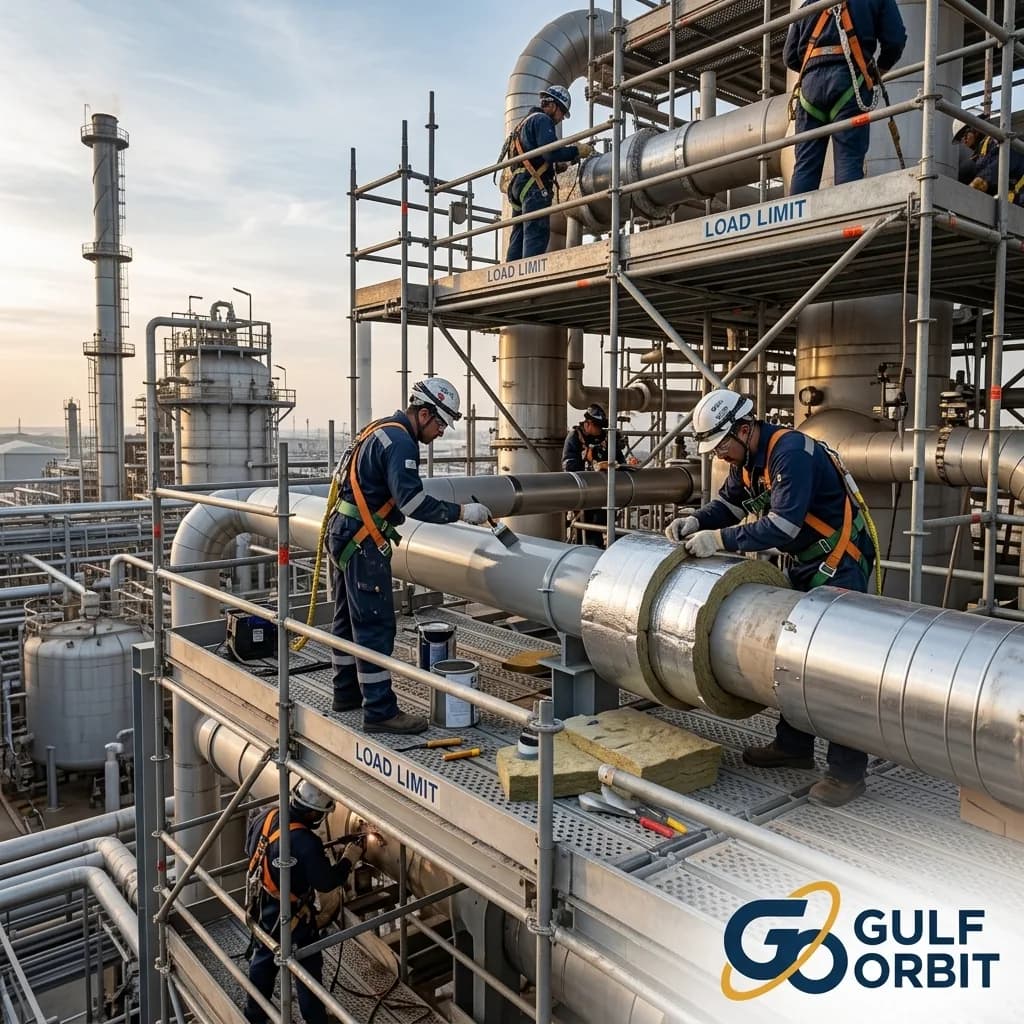
Scaffolders support painting, insulation, mechanical, inspection, and repair work by building access that fits each trade's specific needs: containment sheeting for spray painting, wider platforms for insulation material, load-rated decking near mechanical flanges.
Key takeaways
- Each trade needs a different kind of platform, not just 'access' in general: the request should name the trade, not just the height.
- Spray painting usually needs sheeted or enclosed scaffold for containment, which is a different structure from open access scaffolding.
- Insulation work needs wider platforms and staging space for bulky material, unlike a narrow inspection-only platform.
- Sequencing the scaffold plan around trade order reduces the waiting time between trades, not just the total time on site.
Why trade teams rely on scaffolding
Painting, insulation, inspection, and mechanical teams generally cannot reach the work area without safe temporary access, and each of these trades needs that access to look different. Scaffolding built generically for 'access' without considering the trade using it often needs modification once the actual work starts, which costs more time than specifying the trade upfront would have.
Spray painting needs containment, not just height
Spray painting and coating work typically needs the scaffold sheeted or enclosed to contain overspray and control the working environment: a materially different structure from an open platform built for inspection or general maintenance access. If sheeting isn't specified in the original request, it usually means a return trip to modify the scaffold once the painting crew arrives and finds it unsuitable.
Insulation work needs staging space
Insulation crews, thermal or acoustic, need wider platforms than a narrow inspection catwalk, since insulation material has to be staged and handled at height, often in bulky rolls or panels. A platform sized for one worker to inspect a joint is not sized for a two- or three-person insulation crew working with material.
Mechanical and piping work needs load-rated decking near flanges
Mechanical and piping teams working near flanges, valves, or fittings often need a platform rated for tool weight and material staging directly at the work point, not just personnel access nearby. This affects both the load class of the scaffold and exactly where the platform needs to sit relative to the equipment.
How Gulf Orbit supports trade access
Gulf Orbit can review requests for scaffolders, helpers, lead men, supervisors, and labour support when the purpose is to support trades that need access to elevated or difficult work fronts, and uses the trade specified in the request to plan the right kind of structure, not a generic one.
Reducing waiting time between trades
When the scaffolding plan follows the actual trade sequence (inspection, then insulation, then painting, for example) each trade's platform requirements can be anticipated and modified for in order, rather than discovered as a surprise each time a new trade arrives. Including this sequence in the request is one of the most effective ways to cut waiting time on a multi-trade work front.
For access on plant work far from the Eastern Province, see scaffolding in Jazan and the scaffolding division.
Frequently asked questions
Can Gulf Orbit support scaffolding for painting and insulation?
Yes. Gulf Orbit can review scaffolding manpower and access support requests for painting, insulation, inspection, and mechanical work, planning the platform type around the specific trade.
Should I mention the trade using the scaffold?
Yes. Always. The trade determines platform width, load rating, and whether containment sheeting is needed, not just the access height.
Does spray painting really need a different scaffold?
Generally yes. Spray painting and coating work usually needs sheeted or enclosed scaffold for overspray containment, which is a different structure from open access scaffolding used for inspection.
Can one scaffold be reused across multiple trades in sequence?
Often yes, with modification between stages. Sequencing the trades in the original request lets the modification plan be anticipated rather than handled reactively each time.