

Rigger Levels I, II and III Explained: Which Level Your Lift Needs
Saudi sites specify riggers by level. In common site usage Level III slings and signals, Level II also works out rigging for routine lifts, and Level I supervises lifts against the lift plan. How to put the right level in an RFQ.
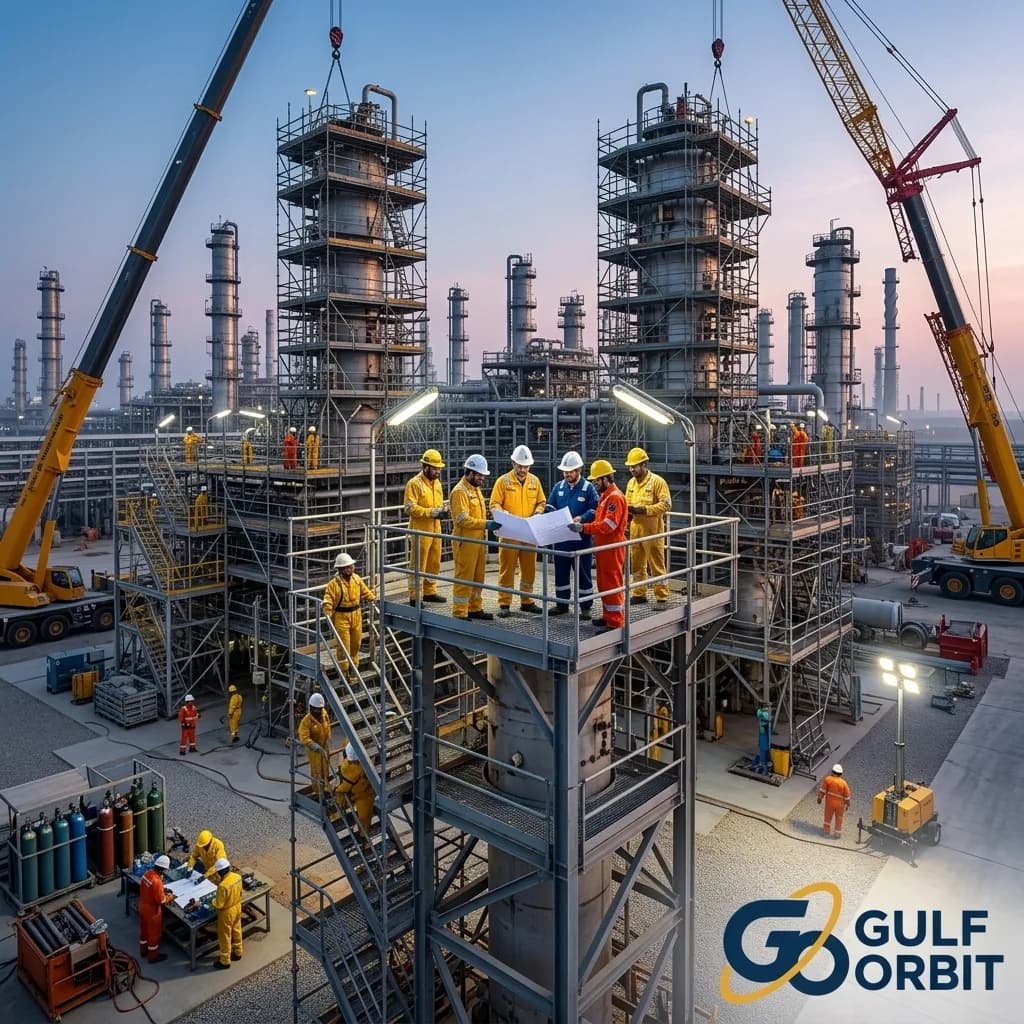
Saudi sites specify riggers by level, and the level decides what a rigger may do on a lift. In common site usage, a Level III rigger slings loads and signals the crane, a Level II rigger also works out rigging arrangements for routine lifts, and a Level I rigger supervises lifts against the lift plan. Your site's lifting procedure decides which level each task needs. Gulf Orbit supplies TUV-carded Level III riggers.
Key takeaways
- In common Saudi site usage the numbering runs downwards: Level III is the entry level and Level I is the most senior.
- Level III: slinging and signalling. Level II: also rigging arrangements for routine lifts. Level I: supervising lifts against the lift plan.
- Your site's lifting procedure decides which level each task needs; check it before writing the RFQ.
- Put the level and the quantity per level in the RFQ, so cards are checked against it before CVs are sent.
- Gulf Orbit supplies TUV-carded Level III riggers.
Why the level matters
Lifting is one of the most tightly controlled activities on an industrial site. The rigger's level is printed on the card and checked against the permit, so a rigger at the wrong level cannot do the task, however experienced. Getting the level right in the RFQ is what stops that happening at the gate.
The three levels in common site usage
Saudi industrial sites commonly grade riggers in three levels. The numbering runs downwards: Level III is the entry level and Level I is the most senior. Exact scopes are set by the card scheme and your site's lifting procedure, so treat this as a guide and check your own rules.
| Level | What the rigger does | Typical use |
|---|---|---|
| Level III | Slings loads and signals the crane | Rigging crews on routine lifts, working to the rigging set by a more senior rigger or the lift plan |
| Level II | Also works out rigging arrangements for routine lifts | Planning slings, shackles and attachment points for routine lifts |
| Level I | Supervises lifts against the lift plan | Directing lifts that the site's procedure puts under a lift supervisor |
Critical lifts
Sites define critical lifts in their own lifting procedure. They usually need a written lift plan and a more senior person to direct them. A critical lift still needs Level III riggers to sling and signal, but the plan and its supervision sit with the level and role your procedure names. Say in the RFQ whether the riggers will work on critical lifts, and who on your side holds the lift plan.
Riggers and crane operators on one request
A crane without a rigger is idle, and a rigger without a crane is waiting. If your scope involves lifting, request both together and say whether the crane is yours or hired. Gulf Orbit has supplied operators for mobile cranes from 25 t to over 250 t, and supplies mobile crane operators and tower crane operators alongside riggers.
What to put in the RFQ
A rigger request that states these can be matched and card-checked in one pass.
- The level your site requires for each task, and the quantity at each level.
- Whether TUV cards are required, and whether Aramco certification is required.
- The crane types and capacities the riggers will work with.
- Whether any lifts are critical under your procedure, and who supervises them.
- Site, start date, duration and shift pattern.
How Gulf Orbit supplies riggers
Gulf Orbit supplies Level III riggers with TUV cards. Aramco-certified and non-Aramco riggers are both available, and card copies are sent with CVs for your approval before mobilization. For which other trades commonly need a card, see which trades need a TUV card.
FAQ
What is the difference between rigger Level I, II and III?
In common Saudi site usage, a Level III rigger slings loads and signals the crane, a Level II rigger also works out rigging arrangements for routine lifts, and a Level I rigger supervises lifts against the lift plan. Your site's lifting procedure sets the exact scope.
Is Level III the highest rigger level?
No. In common Saudi site usage the numbering runs downwards: Level III is the entry level and Level I is the most senior.
Which rigger level does Gulf Orbit supply?
Level III riggers, with TUV cards. Aramco-certified and non-Aramco riggers are both available.
Can Level III riggers work on critical lifts?
They can sling and signal on a critical lift, but the lift plan and its supervision sit with the level and role your site's lifting procedure names. State in the RFQ if riggers will work on critical lifts.