

Gulf Orbit Scaffolding Support for Oil and Gas Maintenance
How scaffolding manpower and access support help oil, gas, refinery, and energy maintenance teams keep work fronts ready.
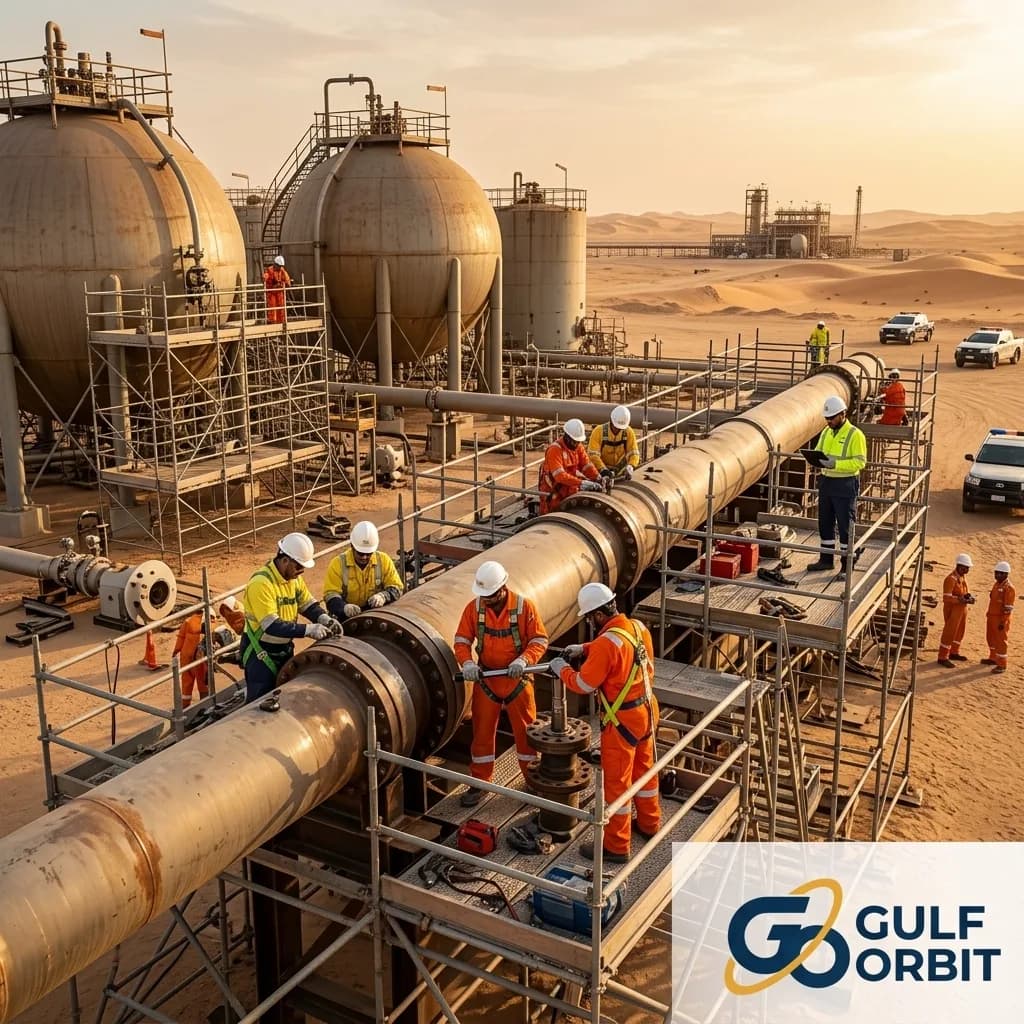
Oil and gas maintenance often needs scaffolders, helpers, and supervisors to keep access ready for inspection, repair, insulation, and mechanical work, coordinated with the site's hot-work/cold-work permit classification.
Key takeaways
- Whether an area is classed hot work or cold work affects the scaffold material and method the crew can use, not just the permit paperwork.
- NDT and inspection windows are often the reason a scaffold has to stay stable and vibration-free, not just structurally sound.
- Confined-space and elevated-vessel access frequently needs a purpose-built access tower, not a standard platform.
- Requests should include plant location, shift pattern, permit classification, and exact work-front needs, not just a headcount.
Why access work is critical in oil and gas
Oil and gas maintenance teams often work in dense, safety-critical areas where access has to be staged and coordinated around equipment that may still be partially live. Scaffolding is typically required before inspection, mechanical repair, insulation, coating, or cleaning teams can begin, which makes it one of the first approvals a maintenance schedule depends on.
How hot-work and cold-work classification affects the job
Areas near hydrocarbon process equipment are typically classified for permit purposes as hot work (where spark-generating activity is restricted or requires special controls) or cold work. This classification can affect the scaffold materials and methods a crew is allowed to use in that zone: for instance, some hot-work areas require non-sparking tools or specific bonding and grounding practices during erection. Knowing the classification in advance, rather than discovering it on arrival, avoids a stalled start while the crew waits for the right equipment.
Access for inspection and NDT work
Non-destructive testing and inspection work often needs a platform that isn't just structurally sound but also stable and low-vibration, since some inspection methods are sensitive to movement. A scaffold built for general maintenance access isn't automatically fit for this: the request should say explicitly if the access is supporting inspection or NDT work so the platform can be planned accordingly.
Confined-space and vessel access
Access to elevated vessels, columns, or confined spaces frequently needs a purpose-built access tower rather than a standard wall-mounted or free-standing platform, particularly where the entry point itself is restricted or requires a specific approach angle. This should be flagged early, since it changes both the material plan and how long erection realistically takes.
How Gulf Orbit supports maintenance schedules
Gulf Orbit can review scaffolder supply and labour support requests for maintenance work in refineries, energy facilities, petrochemical plants, and related industrial sites, working within whatever permit classification, inspection requirement, and access-point constraint the site specifies.
Documents and site readiness
Many oil and gas sites require specific approvals before workers enter: medical fitness, safety induction, and role-specific training records among them. A complete request includes site rules, documents needed, start date, duration, permit classification for the work area, and whether work runs on day shift, night shift, or extended hours.
Refinery and terminal access is covered city by city, for example scaffolding in Ras Tanura and in Yanbu; all options are on the scaffolding page.
Frequently asked questions
Can Gulf Orbit support oil and gas maintenance access work?
Yes. Gulf Orbit can review scaffolding manpower and access support requests for oil, gas, refinery, petrochemical, and industrial maintenance projects, including work in hot-work classified areas.
What details should energy sites provide?
Send the location, work front, headcount by role, shift pattern, permit/area classification (hot work or cold work), duration, start date, and documentation requirements.
Does scaffolding for NDT or inspection work need anything different?
Often yes: a stable, low-vibration platform matters more for some inspection methods than for general maintenance access. Flag this in the request so it's planned for from the start.
Can Gulf Orbit provide access towers for confined-space or vessel work?
Requests involving confined-space or elevated-vessel access can be reviewed when the entry point, height, and any restricted-approach details are included, since these often need a purpose-built structure rather than a standard platform.