

Cuplock, Ringlock, Kwikstage or Tube-and-Fitting: Which System Your Scaffolding Crew Must Know
A scaffolder fluent in one system is not automatically efficient in another. How tube-and-fitting, Cuplock, Ringlock and Kwikstage differ on site, where each is used, and why the system belongs in your scaffolder request.
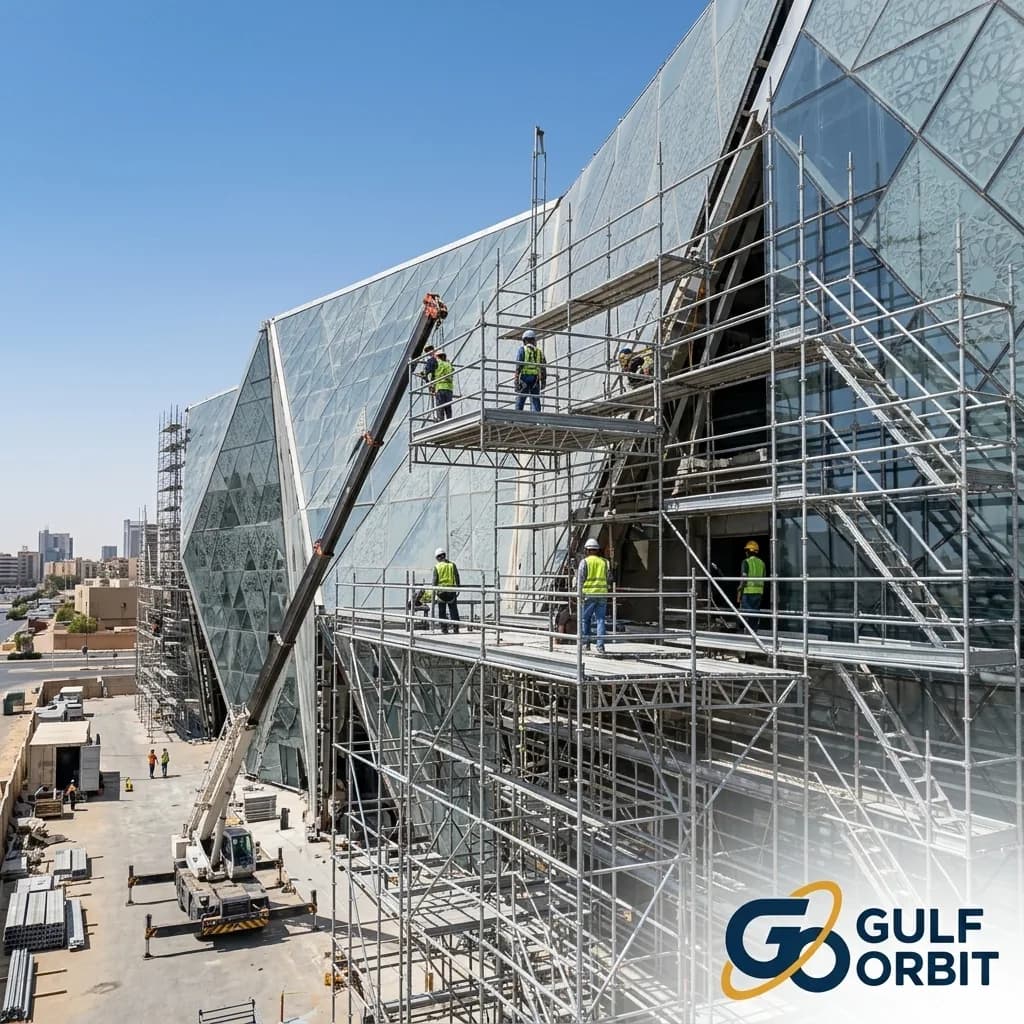
Tube-and-fitting (also called tube-and-clip) joins steel tubes with couplers and adapts to any geometry, which is why it dominates around vessels and pipe racks. Cuplock, Ringlock and Kwikstage are system scaffolds with connection points at fixed intervals, so they erect faster on regular structures such as facades and formwork support. A crew fluent in one system is not automatically efficient in another, so name the system in the request.
Key takeaways
- Tube-and-fitting (tube-and-clip) is the most adaptable and the slowest to erect; it suits vessels, pipe racks and irregular steelwork.
- Cuplock, Ringlock and Kwikstage are system scaffolds: faster on regular geometry, less flexible around awkward shapes.
- Ringlock's rosette allows angled connections, which makes it more versatile than Cuplock on industrial work.
- Name the system and the work type in the request, so the crew is matched to it rather than to a general scaffolder title.
- Your site's scaffold procedure and inspection tags apply whichever system is used.
Why the system matters for the crew
Each system has its own components, connection method, bracing rules and erection sequence. A scaffolder who has spent years on tube-and-fitting around pipe racks will be slower, at first, on a Ringlock facade, and the reverse is also true. On a tight programme, that learning curve costs days. Naming the system in the request lets the crew be matched to it from the start.
The four common systems side by side
These are general characteristics. Your site's scaffold procedure, design and inspection regime decide how any system is used.
| System | How it connects | Strength on site | Typical use |
|---|---|---|---|
| Tube-and-fitting (tube-and-clip) | Steel tubes joined with couplers at any point along the tube | Fits any geometry; most adaptable | Vessels, pipe racks, structural steel, shutdown work |
| Cuplock | Ledgers locked into cup nodes set at fixed intervals on the standards | Fast on regular, repeatable geometry | Building facades, formwork and falsework support |
| Ringlock | Wedge-head ledgers and braces into a rosette on the standards, including at angles | Fast and more versatile than Cuplock | Industrial and building work, access around plant |
| Kwikstage | Ledgers wedged into pressed fittings on the standards | Quick to erect on straight runs | Building facades and general access |
Tube-and-fitting: the industrial default
Because a coupler can go anywhere along a tube, tube-and-fitting can wrap around a vessel, step over a pipe rack or tie into irregular steel. That flexibility is why it is common in refineries and petrochemical plants and during turnarounds. It is also the slowest to erect and the most dependent on the scaffolder's skill, so experience on industrial tube-and-fitting work is the thing to ask for.
System scaffolds: speed on regular geometry
Cuplock, Ringlock and Kwikstage put the connection points in fixed positions on the standards. On a facade, a slab edge or formwork support, that means faster erection with fewer loose fittings. The trade-off is flexibility: fixed node spacing makes awkward shapes harder, which is where sites mix a system scaffold with tube-and-fitting infill. If your job mixes systems, say so.
Suspended access and mobile towers
Some work needs neither: suspended platforms for high facades, or mobile aluminium towers for short, movable jobs. Both have their own erection and inspection rules. If your scope includes them, name them in the request alongside the main system.
What to put in a scaffolder request
A request that states these can be matched in one pass.
- The system or systems: tube-and-fitting, Cuplock, Ringlock, Kwikstage, suspended or mobile tower.
- The work type: building or industrial, and the heights involved.
- The crew mix: scaffolders, helpers, lead men and supervisors.
- Whether TUV cards or Aramco certification are required. See TUV card requirements by trade.
- Site, start date, duration and shift pattern.
How Gulf Orbit supplies scaffolding crews
Scaffolding is Gulf Orbit's core service. Crews are matched to the system your site actually runs, rather than approximated to a general scaffolder title, and TUV-carded scaffolders are available where the site requires a card. Request crews through scaffolder supply; for equipment, see scaffolding rental and erection. Mobilization of in-Kingdom personnel takes 48–72 hours from purchase order, subject to worker documents and site approvals.
FAQ
What is the difference between Cuplock and Ringlock scaffolding?
Both are system scaffolds with connection points at fixed intervals. Cuplock locks ledgers into cup nodes; Ringlock wedges ledgers and braces into a rosette that also allows angled connections, which makes it more versatile on industrial work.
Is tube-and-clip the same as tube-and-fitting?
Yes. Both names describe steel tubes joined with couplers. It is the most adaptable system and the most common around vessels, pipe racks and irregular steel.
Why should I name the scaffold system in my request?
A crew fluent in one system is not automatically efficient in another. Naming the system lets the crew be matched to it, which avoids a slow start on a tight programme.
Can one crew work on more than one system?
Often, yes, especially where a site mixes a system scaffold with tube-and-fitting infill. Say which systems are involved so the crew is matched to all of them.