

Manpower for Plant Maintenance: Building a Crew That Stays
Routine plant maintenance is not a small turnaround. It needs a stable multi-trade crew that learns the plant and its permit system. Which trades to include, how to plan rotation and continuity, and what to put in the RFQ.
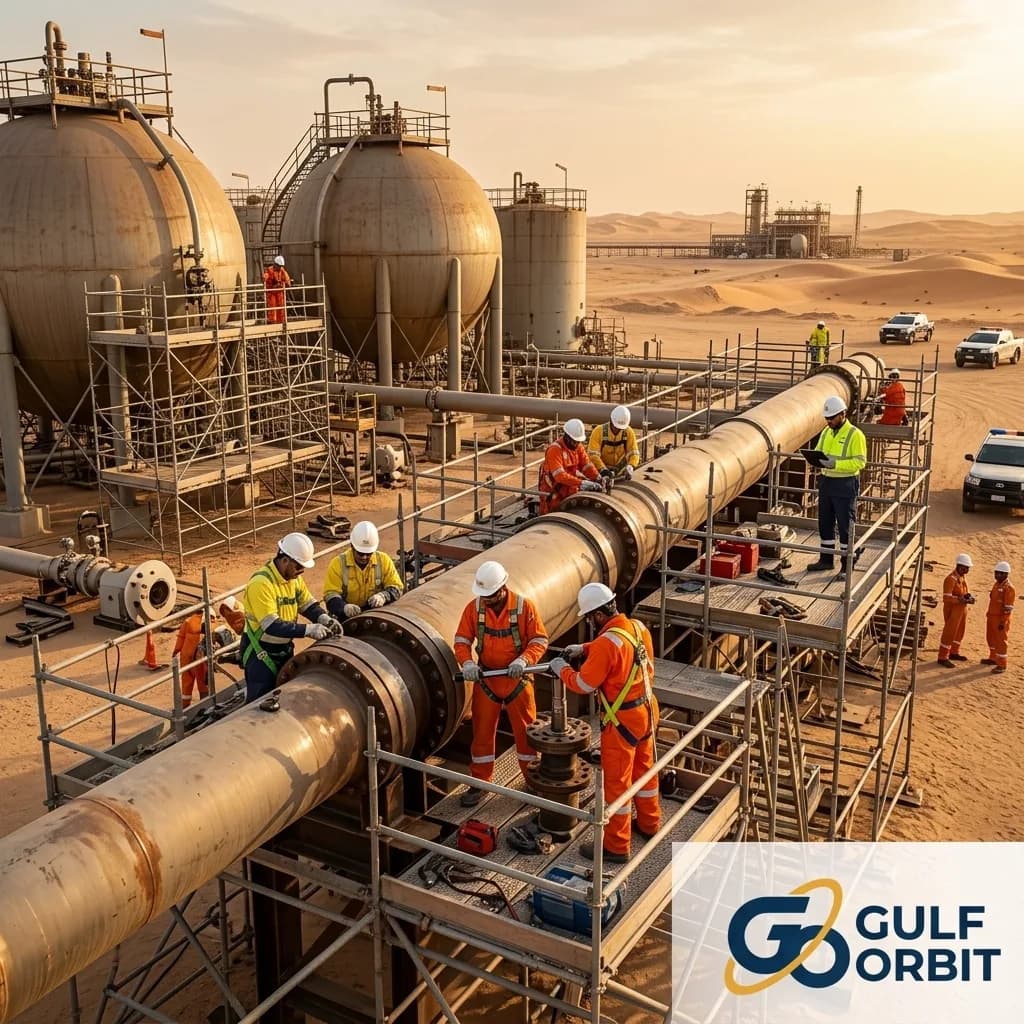
A routine plant maintenance crew is small and stable rather than large and short: mechanical fitters, pipe fitters, welders, E&I technicians and industrial electricians, supported by riggers, scaffolders and helpers, under a supervisor who knows the plant's permit system. Plan it for continuity and rotation over months, separately from any turnaround crew.
Key takeaways
- Routine maintenance and turnarounds are different requests; quote and plan them separately.
- The value of a maintenance crew grows as it learns the plant, so plan for continuity.
- State the duration, rotation and leave pattern in the RFQ.
- A supervisor who knows your permit-to-work system saves more time than an extra tradesman.
- Cards and plant access are checked once per worker, so a stable crew avoids repeating them.
Maintenance is not a small turnaround
A turnaround brings a large crew in for a fixed window and releases it. Routine maintenance is the opposite: a smaller crew that stays for months, works inside the plant's normal operation, and takes on preventive maintenance, running repairs, small modifications and tie-ins as they come up. Sizing a maintenance crew like an outage crew leaves it either too big for daily work or too thin when two jobs land at once. For outage windows, see manpower for a refinery turnaround; for the service, see plant maintenance manpower.
The core maintenance crew
The table shows the trades usually found in a routine maintenance crew at a refinery, petrochemical, power or utility plant.
| Trade | Typical maintenance work | What to specify |
|---|---|---|
| Mechanical fitters | Pumps, valves, small rotating equipment, alignment, gaskets | Equipment types on site |
| Pipe fitters and welders | Line repairs, spool replacement, small tie-ins | Materials and your welding procedures for WPQ tests |
| E&I technicians | Instrument calibration support, loop checks, cable and junction box repairs | Instrument types and the permit system for live work |
| Industrial electricians | Motors, MCC and distribution maintenance, lighting, earthing | Voltage levels and isolation procedure |
| Riggers and scaffolders | Access and lifting for maintenance jobs | TUV card requirements; riggers supplied at Level III |
| Helpers | Staging, cleaning, material handling | Which tradesman each helper supports |
| Supervisor and storekeeper | Daily job allocation, permits, materials and tools | Who issues work orders and permits on your side |
Continuity and rotation
A maintenance crew becomes more productive as it learns the plant: where the equipment is, how the permit office works, which isolation points belong to which unit. That knowledge leaves with every worker who is rotated out. State in the RFQ the expected duration, the rotation and leave pattern you expect, and which positions need to stay with the same person, such as the supervisor and the lead E&I technician. Cards and plant access are approved per worker, so a stable crew also avoids repeating gate approvals. Worker documents are reviewed per project, and CVs and card copies are sent for your approval before mobilization.
What to put in a maintenance RFQ
A complete RFQ gets a response within 24 hours: a priced quotation, or an acknowledgement with the questions needed to price it.
- Plant, unit and city, and the type of plant: refinery, petrochemical, power, water or manufacturing.
- Trades and headcount, with the supervisor and any lead positions named.
- Expected duration, working hours, shift pattern, rotation and leave pattern.
- Card requirements per trade, your welding procedures, and the permit-to-work system.
- Whether the crew may also support an outage later, so the two are planned together.
- Whether accommodation and transport should be quoted; they are quoted on request.
Where Gulf Orbit supplies maintenance crews
Gulf Orbit supplies maintenance manpower from its offices in Dammam, Jubail Industrial City and Al Khobar to plants anywhere in Saudi Arabia, and has supplied turnaround and outage crews in Jubail Industrial City, Ras Tanura and Yanbu. Every worker completes Gulf Orbit's safety induction before deployment; site-specific training is confirmed per site. In-Kingdom personnel mobilize 48–72 hours from purchase order, subject to worker documents and site approvals. For plant manpower by city, see manpower supply in Jubail and manpower supply in Yanbu. When the crew is defined, send the RFQ.
Frequently asked questions
What is the difference between maintenance manpower and turnaround manpower?
Maintenance manpower is a smaller, stable crew that works for months inside normal plant operation. Turnaround manpower is a larger crew planned around a fixed outage window and released after it.
Which trades does a plant maintenance crew need?
Usually mechanical fitters, pipe fitters, welders, E&I technicians and industrial electricians, supported by riggers, scaffolders and helpers, with a supervisor and a storekeeper.
Can the same supplier provide maintenance and turnaround crews?
Yes. Say so in the RFQ, and the two are quoted separately so neither is sized for the other.
How fast can a maintenance crew mobilize?
In-Kingdom personnel mobilize 48–72 hours from purchase order, anywhere in Saudi Arabia, subject to worker documents and site approvals.