

Gulf Orbit Checklist for Scaffolding Manpower Requests
A simple procurement checklist for requesting scaffolders, helpers, supervisors, labour support, and temporary access services.
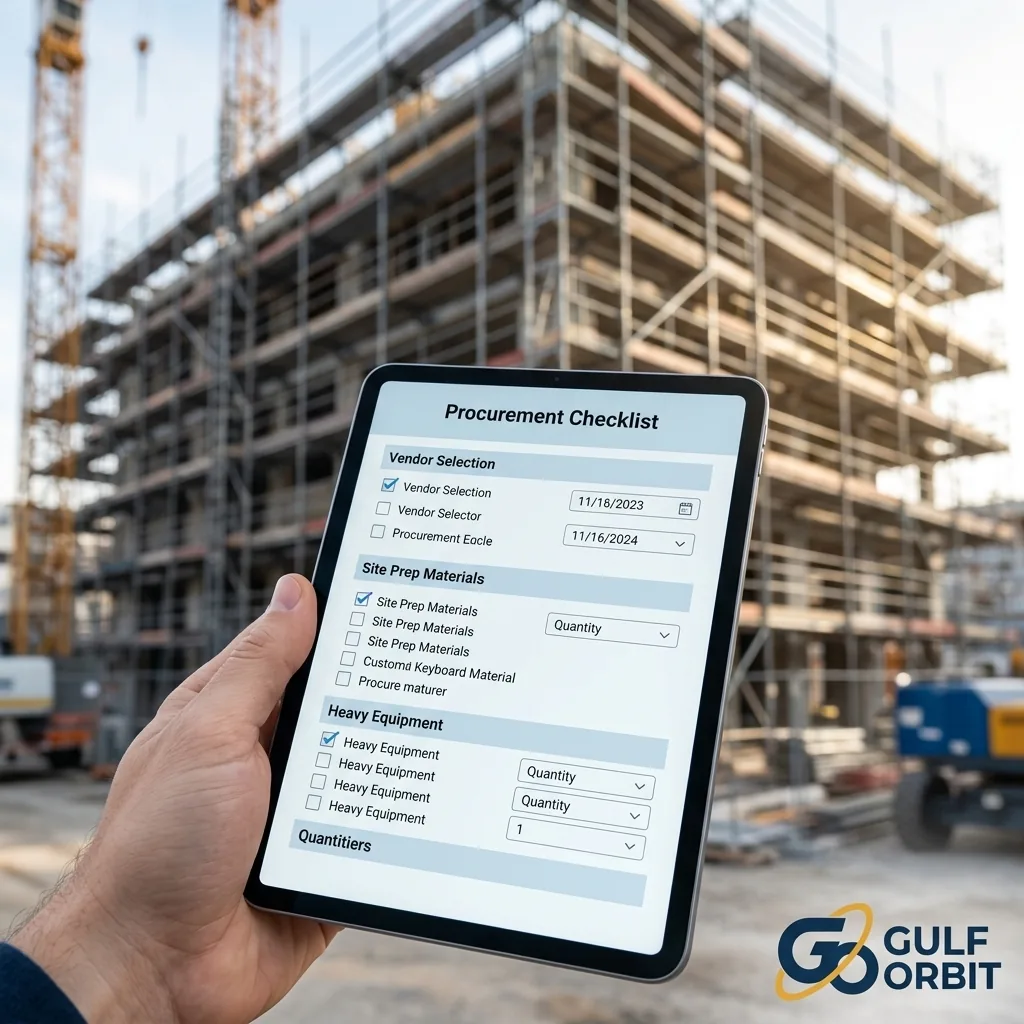
A good scaffolding manpower request includes location, worker categories by role, headcount, duration, start date, shift timing, access scope, and documentation requirements: sent together, not as separate follow-up messages.
Key takeaways
- A request that only says 'send rate for scaffolders' leaves too much unknown to price or plan against.
- Worker categories (scaffolder, helper, lead man, supervisor) should be defined before a rate is discussed, not after.
- Safety, documentation, and site-access requirements belong in the first message, not a follow-up after mobilization is already planned.
- The same checklist works whether the need is rental, erection, dismantling, manpower only, or a combination.
Start from the general checklist, then add the scaffold details
The fields every manpower request needs (city and site, trades and headcount per trade, start date, duration, shift pattern and the cards the site requires) are listed once in the manpower requirement checklist. This page covers only what a scaffolding request adds on top: the scope (rental, erection, dismantling or crews only), scaffolders, helpers and supervisors as separate lines, and the scaffold system the site runs.
Describing the work front itself
Beyond headcount, describe what the scaffold needs to support: the trade using it, the approximate access height, and whether the structure will need to be modified or moved during the job. This context is often what separates a fast, accurate response from a generic one.
Safety and documentation details
Share gate-pass requirements, certification expectations, medical fitness or training documentation, PPE rules, and any client approval process that workers must pass before arriving at site. These details affect mobilization timing directly, so leaving them out doesn't speed up the process; it just moves the delay to later.
Commercial and contract details worth including
If known, note the expected contract structure (whether this is a one-off request, a recurring need, or part of a longer maintenance contract) and any invoicing or payment terms the site's procurement process requires. This helps the response come back structured for how the relationship is actually expected to work, not just for a single quote.
How Gulf Orbit uses the checklist
Gulf Orbit uses these details to review whether the request fits scaffolder supply, scaffolding rental and erection, manpower support, labour support, or a combination, and to give a response that reflects the actual work front rather than a generic rate.
A full scaffolding RFQ checklist, with material as well as crew, is on the scaffolding page; Madinah shows how a city adds its own items.
Frequently asked questions
What is the minimum information needed for a quote?
At minimum, send the location, worker type by role, headcount, start date, duration, and shift timing. Adding the work front and trade using the scaffold speeds up the response further.
Should I include certification requirements?
Yes. Any safety, training, certification, gate-pass, or documentation requirement should be included in the first message, not raised after mobilization has already been discussed.
Does this checklist change for rental versus manpower-only requests?
The core checklist stays the same (location, scope, headcount or equipment need, duration, and documentation) it's simply applied to equipment specifications for rental requests and to worker roles for manpower requests.
Should I mention if this is a recurring need?
Yes. Noting whether the request is one-off or part of a recurring or longer-term need helps the response reflect the right kind of commercial arrangement from the start.